

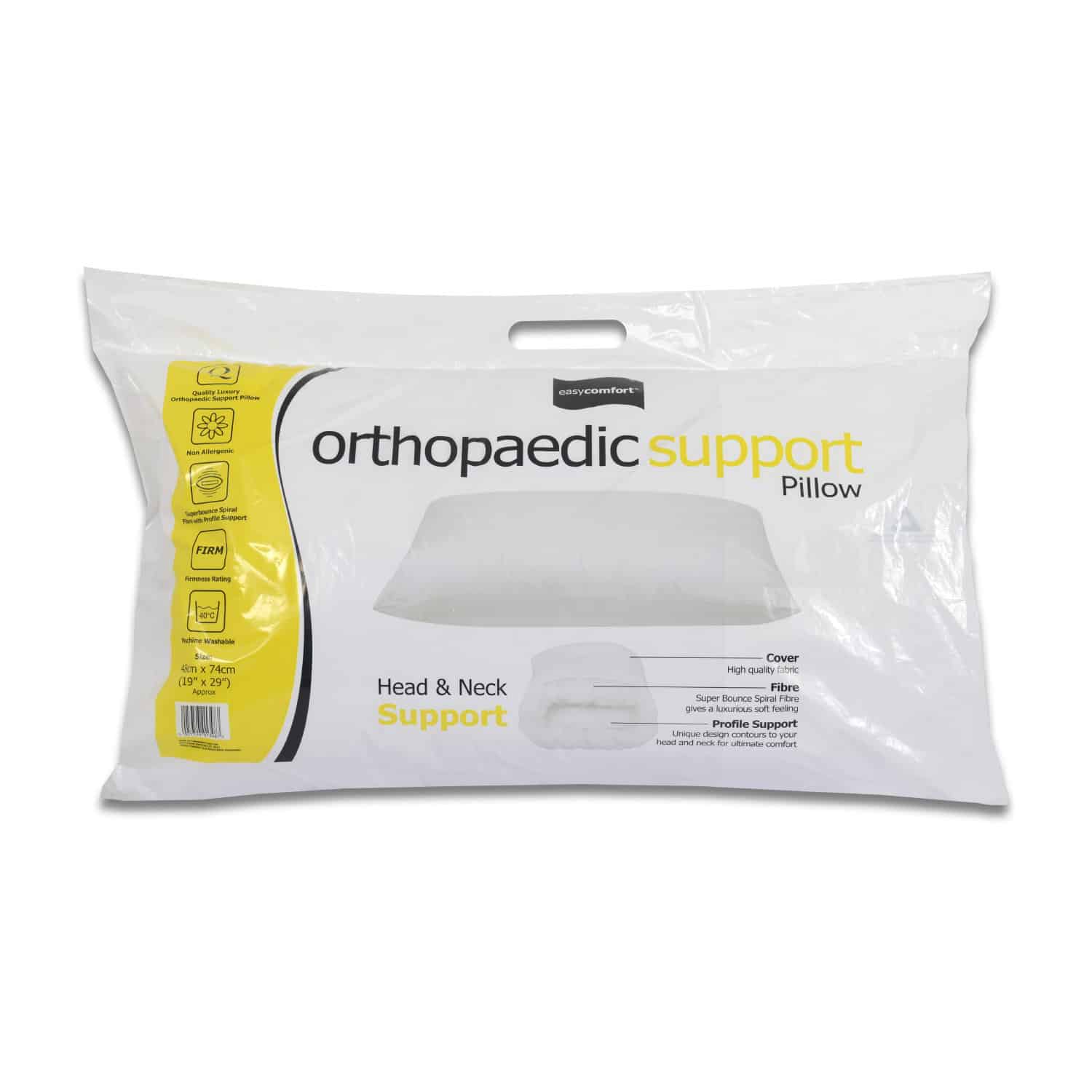


What Is an Orthopaedic Pillow?
An orthopaedic pillow is a sleep aid that has been carefully designed to support the cervical spine and keep it in a neutral position while you sleep. Unlike traditional pillows that simply cushion your head, orthopaedic pillows have specific contours and firmness levels to support your neck and upper back.
The biggest difference between orthopaedic and standard pillows is in how they are made. Standard pillows often fail to provide enough support, which often leads to muscle strain, spinal compression, reduced circulation, and morning stiffness. Orthopaedic pillows, on the other hand, are built with the body’s natural shape in mind. They have raised edges that support the neck, dips for head support, and specific height measurements to fill the gap between your shoulder and head depending on your preferred sleeping position.
How Do Orthopaedic Pillows Work?
The effectiveness of orthopaedic pillows comes down to how they work: pressure redistribution and ergonomic contouring. Memory foam pillows, for example, use the heat and pressure from your body to shape themselves to your head and neck, creating a customised support surface. Contoured pillows have different dips for your head and raised edges specifically positioned to support your neck. Cervical pillows are curved to fit the natural inward curve of the neck.
When used correctly, orthopaedic pillows keep your cervical spine in a neutral position, which means that your ear, shoulder, and hip should all be in a straight line. This alignment is important because it allows muscles to fully relax and spinal discs to rehydrate properly while you sleep.
How to Use an Orthopaedic Pillow
How you use your pillow has a big effect on the benefits you get. Here are some important tips on how to get the most from your orthopaedic pillow:
Back sleeping: When you sleep on your back, your pillow should be just high enough to support your head and keep your chin in a neutral position. You shouldn’t tuck your chin in or tilt your head back. A single pillow is often all you need.
Side sleeping: This is where orthopaedic pillows prove to be particularly valuable. Position the pillow in a way that it supports both your neck and head, filling in the space between your shoulder and neck. A lot of people find that putting a rolled-up hand towel in front of the pillow helps support their neck more. This mimics the ergonomic shape of contoured orthopaedic pillows. When side sleeping, it’s important that both arms are relaxed in front of you and your shoulders are perpendicular to the bed. If your upper shoulder rolls forward, your pillow is too low; if it rolls backward, your pillow is too high.
Stomach sleeping: If you have to sleep on your stomach, use a very flat pillow or no pillow at all. This position puts a lot of stress on the neck. If you can, the best thing you can do is stop sleeping on your stomach.
It’s also worth noting that if you’re a combination sleeper who alternates between positions throughout the night, some orthopaedic pillows have reversible designs with different heights on each side. This allows you to adjust your pillow as you change positions.
Related products

Bedding

Bedding


Bedding

Bedding


Bedding